

Avra Boston
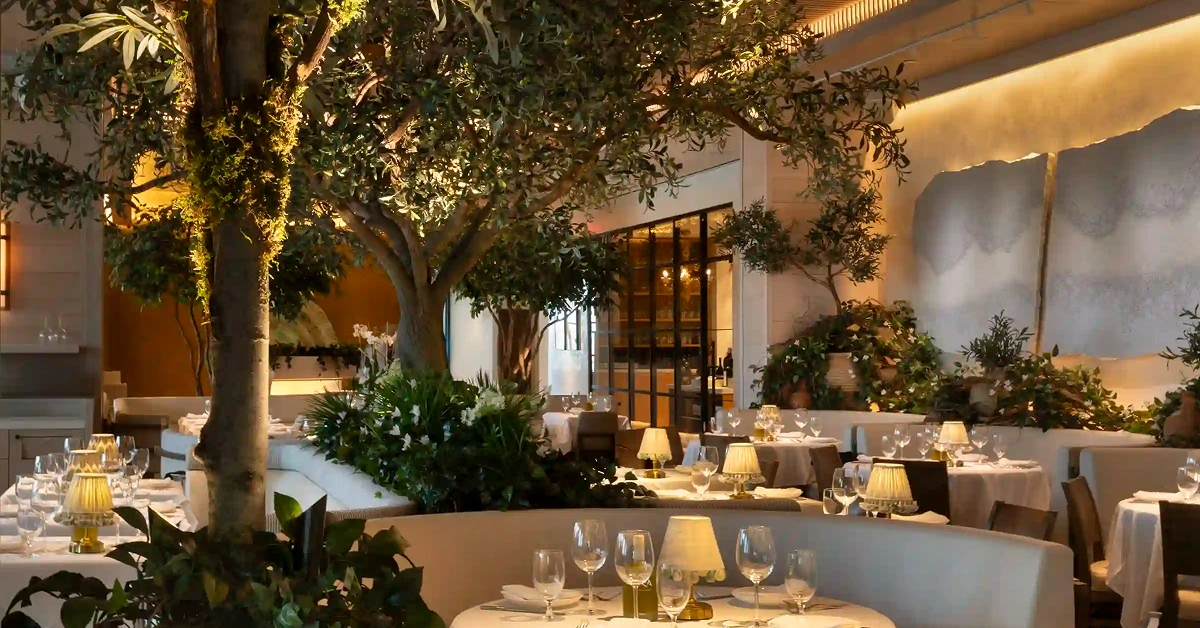
Avra is a hospitality brand that has built its identity around Mediterranean atmosphere — specializing in creating naturally flowing dining environments. When the team behind the Boston location began working to design the interior, that expectation carried weight from the first conversation.
As the newest addition to the Avra Group’s chain of restaurants, Avra Boston would need to feel like part of the same family while standing on its own. Greenery was central to that vision. Custom trees placed throughout the dining room, host desk, bar area, and along the facade would provide the organic warmth and human scale that defines the brand’s character.
Intent
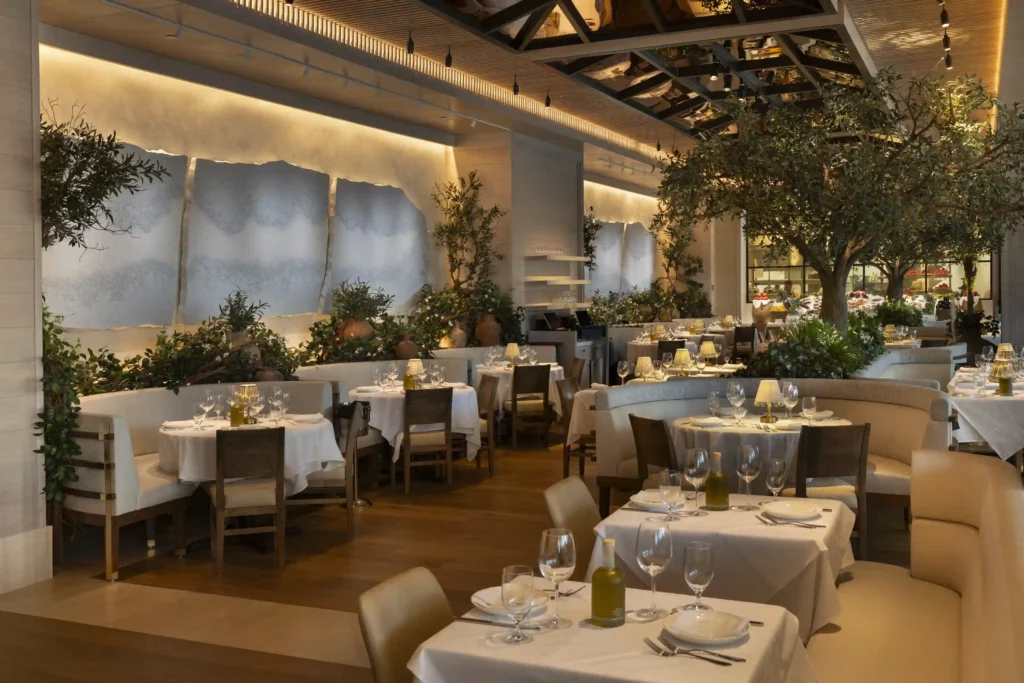
The design team’s goal was never simply to furnish a restaurant with plants. Each tree had a role — compositionally, spatially, and atmospherically. The designer’s directions reflected a clear point of view: trees should feel sculptural, not decorative. Reference imagery from our previous work with AVRA on their Madison NYC location informed trunk character and branching form. Specific placement conditions, including a millwork opening in one area and planter wells along the facade, meant that off-the-shelf solutions were not good enough to realize design vision. Plantscape was brought in to help translate that design intent into something that could actually be fabricated, approved, and installed.
Challenges
Setting the scene.
Before even getting into coordination complexity, there was the design challenge underneath it all — the trees had to be convincing. AVRA’s aesthetic thrives on the creating an interior environment that exists somewhere between a Mediterranean villa and an ancient grove, and an obviously artificial tree would only break that immersion. Each tree was custom built and developed by cross referencing imagery from existing locations and previous work with Avra, with specific notes on how the canopy should spread, how the trunk should twist, and where the branching should feel most pronounced. The goal was realism in an experiential sense: guests should be able to enter and feel as if everything is as it should be.
Coordinating when the scope expanded.
Early in coordination, it became clear that the floor plans showed more trees than what had been formally quoted — a result of scope changes that had narrowed the package from its original count. Getting everyone working from the same set of assumptions required issuing revised shop drawings, reference the sales order directly, and ask for updated furniture plans before any location or count could be confirmed.
Value engineering alterations to trees.
Layered on top of that, sizing reductions on certain trees created pricing conversations that required explanation: some dimensions, particularly width, remained cost drivers even when height came down. The team worked through those conversations honestly, adjusting the quote and asking the right questions about where the budget actually needed to land.
Conclusion
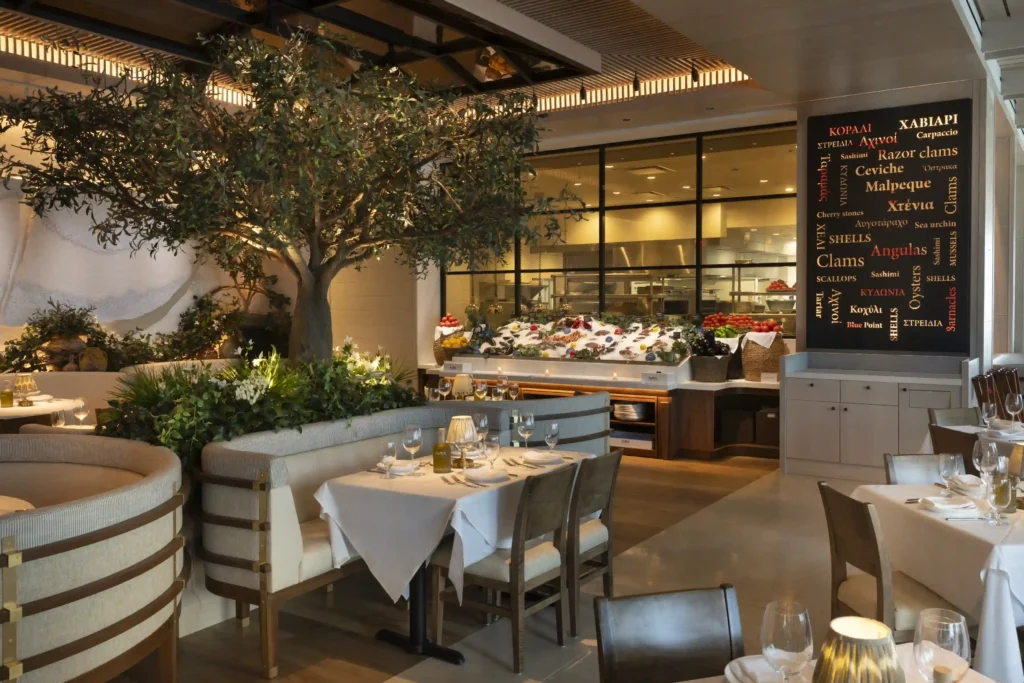
The trees created for AVRA Boston look as if they were woven into the fabric of a Mediterranean vignette. Sculptural olive trees rise from terracotta urns at the center of the dining room, their canopies spreading wide enough to cast the tables below in a kind of dappled shade. Smaller specimens line the perimeter and wrap the curved banquettes. The staircase is anchored by a single tree growing from a bed of white river stone, backlit and reaching upward through the open volume of the stairwell. Creating the sense that this environment had grown naturally and intentionally, is what made this project difficult to execute. It had to read less like a design decision and more like the building was arranged around something that was already there. This required months of design coordination, scope adjustment, and iterative approval before a even single tree shipped, but the finished space makes all of that behind the scenes work invisible, and only leaves the lush environment as the centerpiece of the experience.