JFK Airport Terminal 1

JFK Airport Terminal 1

JFK International Airport is undergoing one of the most significant terminal redevelopments in its history, and Terminal 1 is at the center of it. The new Terminal 1 is designed to be a world-class gateway — a space that communicates scale, arrival, and a sense of place from the moment passengers enter. As part of that vision, the design team selected large-scale artificial sugar maple trees as a central biophilic feature, anchoring the interior landscape with the quiet authority of a northeastern forest canopy.

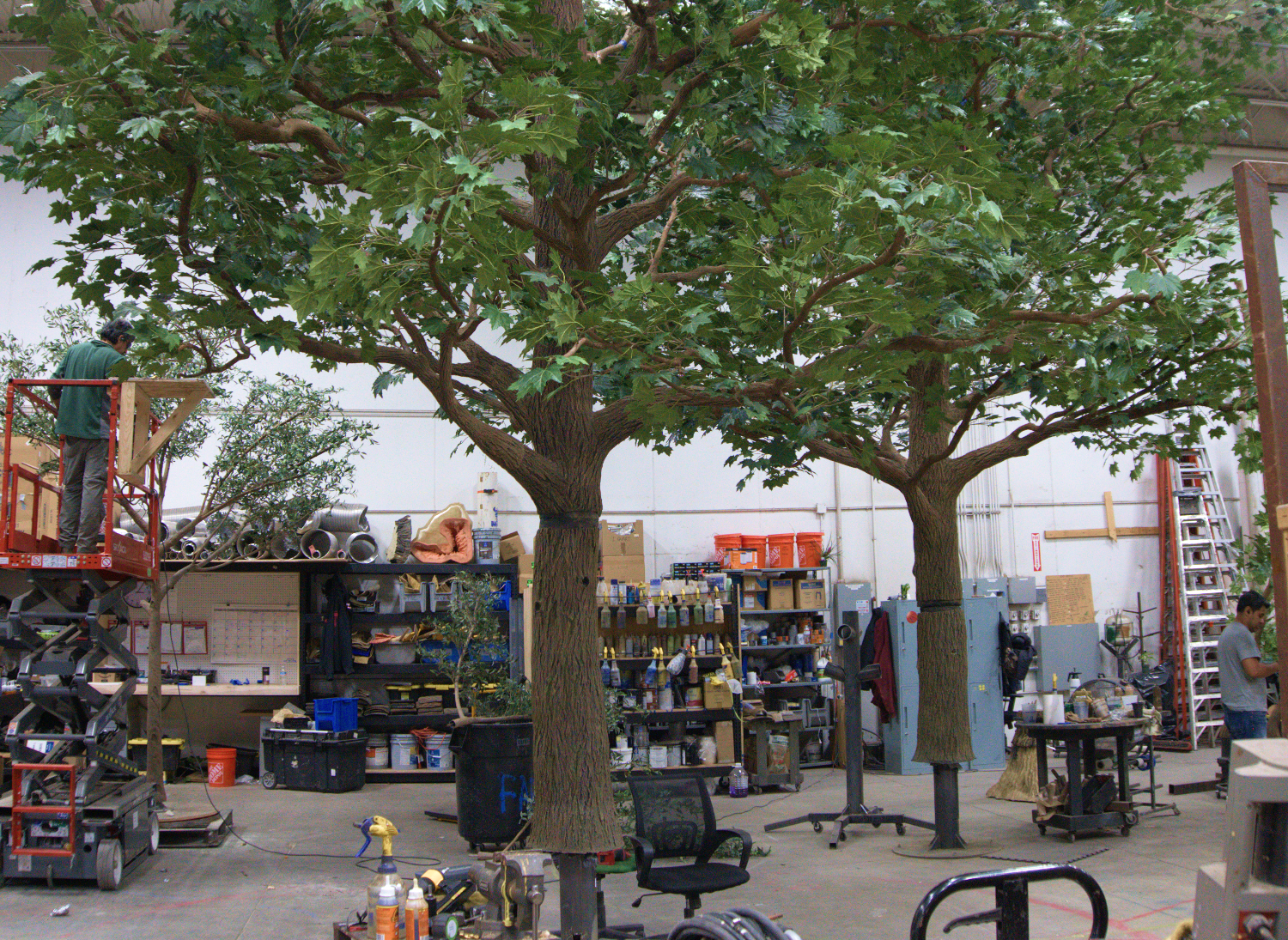
Plantscape Commercial Silk was engaged to design and fabricate the trees. The project is currently moving through our Eden Prairie production facility, with installation scheduled for later this year.

JFK International Airport is undergoing one of the most significant terminal redevelopments in its history, and Terminal 1 is at the center of it. The new Terminal 1 is designed to be a world-class gateway — a space that communicates scale, arrival, and a sense of place from the moment passengers enter. As part of that vision, the design team selected large-scale artificial sugar maple trees as a central biophilic feature, anchoring the interior landscape with the quiet authority of a northeastern forest canopy.

Plantscape Commercial Silk was engaged to design and fabricate the trees. The project is currently moving through our Eden Prairie production facility, with installation scheduled for later this year.

Intent

The goal was never decoration. Large trees in a terminal environment carry a different weight than accent plantings — they define scale, shape movement, and give passengers an immediate emotional anchor in an otherwise transactional space. The design team’s intent was to create a moment of genuine natural presence: trees that read as real, hold up under the scrutiny of close contact, and perform reliably in a controlled interior environment where live planting is not viable.

Species selection landed on sugar maple for its regional authenticity, its strong silhouette, and the structural character of its branching. The trees needed to feel native to the Northeast — not imported, not generic — and to hold their own within a terminal designed to make a statement.

Challenges

Defining the trees precisely enough to build them. 

Even after the project had design approval, significant work remained before fabrication could begin. Species, sizing, bark texture, foliage character, and base attachment method all required resolution. The team worked closely with the design and engineering contacts to close out the spec — issuing additional detail sheets, confirming the sugar maple target, and aligning on attachment approach before production could move forward.

Translating the concept into something buildable.

Once the design intent was locked, the challenge shifted to constructability. The planter and liner conditions at JFK introduced real constraints: the trees could not be bolted to the floor, requiring a gravity base plate strategy sized to support structures of this scale without mechanical anchoring. The team worked through steel tube geometry, vertical configuration, bolt access constraints, branch clearance, liner openings, and phased component delivery — including shipping base plates ahead of the tree structures to accommodate adjacent work on site.

Managing field realities as they emerged.

As with any large-scale transportation project, conditions in the field did not always match the drawings. A height discrepancy at one tree location — caused by misalignment between architectural and landscape drawings and what was actually built — required recalculation and modification. Base plate lead times, anchor coordination, and on-site sequencing were actively managed to keep the project on schedule. The scope also expanded into related groundcover species and fire-retardant finish treatment, positioning the tree installation as part of a fully coordinated interior landscape package.

Conclusion

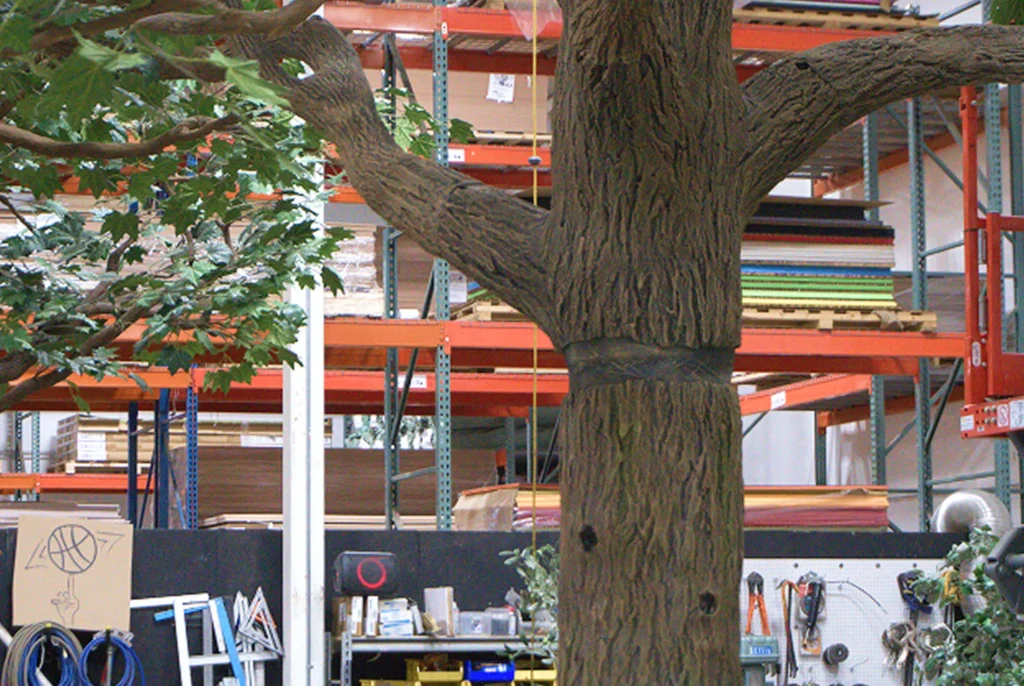
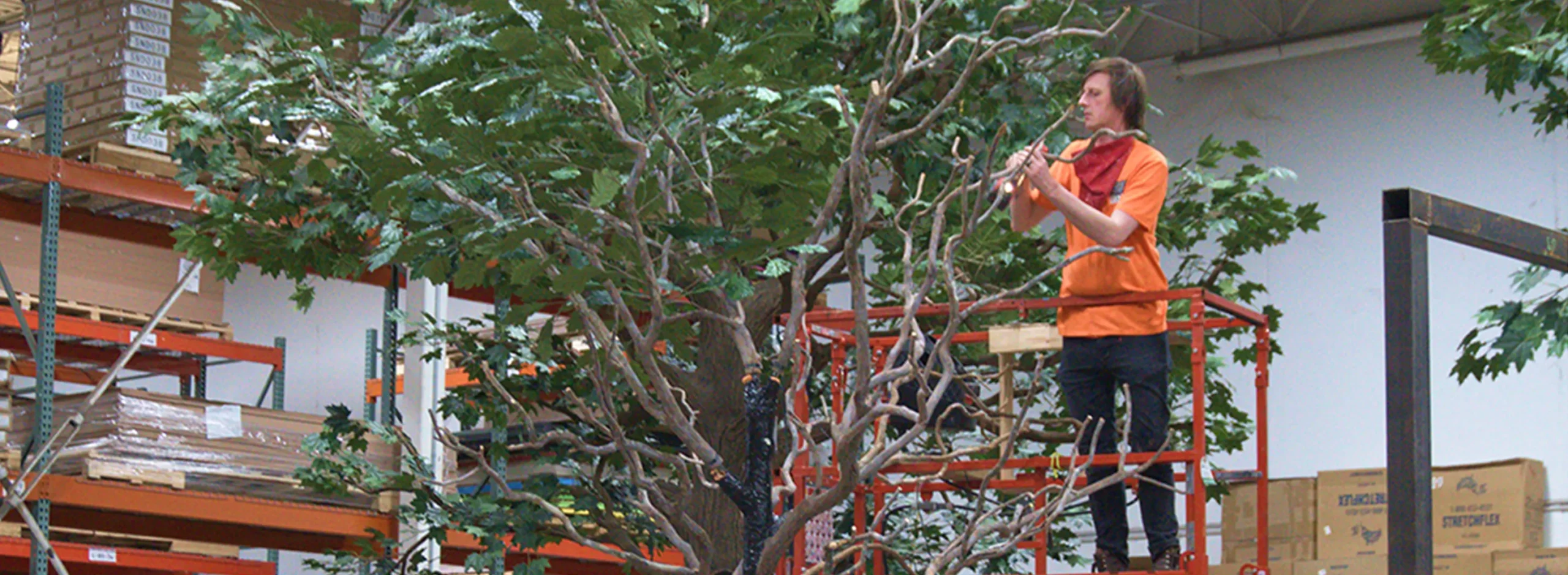
The JFK Terminal 1 trees represent exactly the kind of problem that artificial botanicals are uniquely equipped to solve. Live trees at this scale, in a climate-controlled terminal, would be logistically untenable — but passengers deserve more than a sterile transit hall. Plantscape’s ThermaLeaf® foliage provides fire-code compliance without sacrificing the density, texture, and realism that make these trees believable at close range. The fabrication process, currently underway, involves every layer of the tree from the structural steel core through bark application and final foliage placement — a level of craft that is rarely visible once a project is complete.

More Success Stories

All Case Studies
La Guardia Airport

La Guardia Airport

BACKGROUND Plantscape Commercial Silk collaborated with Supermass Studio on the interior landscape for Terminal B at LaGuardia Airport, New York. Supermass Studio’s original plan featured live plants and trees. However, due to the climate-controlled interior and the large scale of the trees required, live greenery was not a viable solution. Plantscape provided a practical alternative, recommending high-quality artificial plants that maintained aesthetic realism while eliminating the risks and costs of live plants. INTENT The goal was to transform Terminal B into a calming and immersive environment for passengers. Airports, often associated with stress from delays and layovers, needed a design […]

Read more
Pool Deck at Syntech Lawns

Pool Deck at Syntech Lawns

PREMISE Our client wanted to transform this hyper modern property into something lush and overgrown, fusing its identity more closely with nature and softening the overall appearance and energy of the facility. The foliage needed to look natural, cover a huge area, and last for several years in order to make the investment worthwhile – working against that goal would be nearly constant sunshine and intense coastal winds. This project underwent a lot of evolution as it progressed in design and product choice, where pragmatic thinking helped the client secure a longer-lasting outcome. INTENT The conceptual design for this project […]

Read more
The Astros Green Wall at Minute Maid Park

The Astros Green Wall at Minute Maid Park

PREMISE Let’s take a moment to talk about branding. Branding can mean a lot, from the appearance of a logo, to the color scheme of a room, and the way in which it’s executed goes a long way to color your perception of the brand. For example, there’s a notable difference in perception between a sticker and an engraving. A sticker of a logo or brand mark shows no depth of thought, and no consideration for context. It can be applied virtually anywhere for a trivial cost, and is most often met with a response of disinterest or dubiousness. An […]

Read more
ESG Parkway Palace

ESG Parkway Palace

CASE STUDIES ESG PARKWAY PLACE ST LOUIS PARK, MN The ESG Parkway Place project was the creation of a low maintenance uniquely-shaped green wall in the lobby of the client’s upscale apartment building. They wanted a low-maintenance green wall featuring dry prairie foliage; The final result was a gorgeous art piece that perfectly fit the lobby wall. . Project Timeline Design 4 Weeks Production 12 Weeks Software Used Conceptual Adobe Cloud Schematic Rhino3D | Enscape Construction Docs AutoCAD ✖ CASE STUDIES 1600 West End ST LOUIS PARK, MN 1600 West End Corporate Building project was the implementation of a subtle […]

Read more
All Case Studies
Shopping List0
There are no products in the List!
0