Reach out to our sales team to get your next project solved!

Moss walls are a captivating fusion of biophilic design and spatial storytelling. These vertical gardens, often seen in corporate lobbies, hospitality lounges, or modern workspaces, serve not just as aesthetic features but also as tools of wellness, calm, and acoustic balance. But not all moss is created equal. When opting for artificial installations, designers typically face one key decision: replica or preserved moss?
Let’s unpack what sets these two faux moss fabric options apart—and how your design intentions should guide your selection.
Preserved moss starts as a living plant that undergoes a natural preservation process. Water is replaced with glycerin or similar stabilizing solutions to retain the moss’s shape, softness, and texture. The result is authentic plant material that looks and feels alive—without requiring sunlight, irrigation, or trimming.
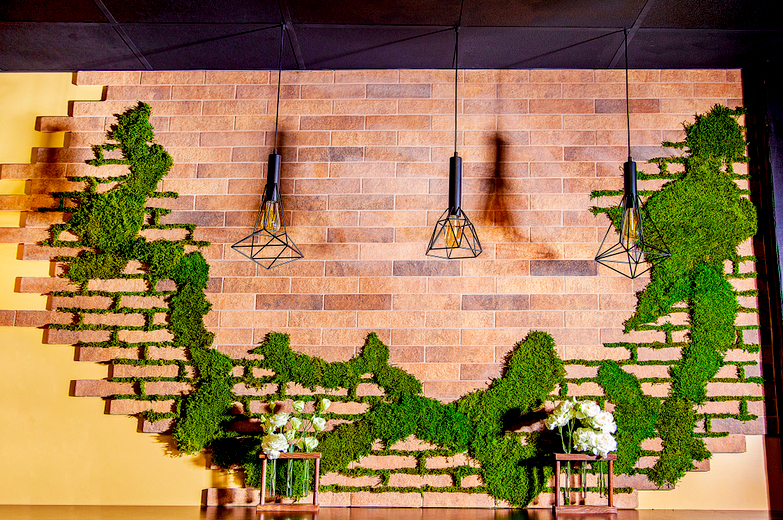
However, because preserved moss is organic matter, it’s vulnerable to UV damage and should never be installed in direct sunlight or high-humidity environments. Longevity is best indoors and in climate-controlled areas.
Replica moss, on the other hand, is completely synthetic. It’s manufactured from durable polymers or felt-based systems designed to imitate the look of moss. While it may not offer the same tactile richness as preserved varieties, replica moss excels in durability, design flexibility, and safety.
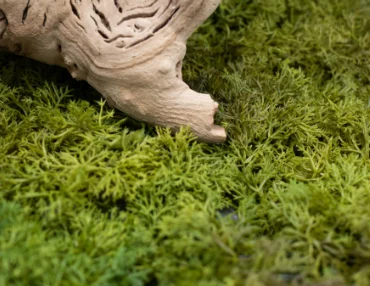
Replica moss is also the go-to for high-traffic zones, expansive walls, or spaces where theming or color-control is critical, such as branded retail environments or hospitality backdrops.
In large commercial environments, aesthetics aren’t enough—acoustics matter. Both replica and preserved moss can be incorporated into acoustic panels, but replica moss integrated into felt-based architectural systems tends to perform better acoustically. Replica moss systems can be pre-engineered with high NRC-rated substrates like PET felt or wool felt to dampen echo and improve sound clarity in open plan spaces, conference areas, and entry lobbies.
Preserved moss may still offer limited sound diffusion thanks to its organic texture, but lacks the same integration with performance materials.
Replica moss offers near-endless customization. Want a branded green wall with logo cut-outs? A ceiling installation that mimics a forest canopy? Replica is your material. It supports modular panels, mixed-media applications, and integration with lighting and signage. It also allows thematic installations—say, pairing lush replica moss with boxwood, ferns, or faux florals to tell a seasonal or conceptual story.
Preserved moss is more suited for minimalist or organic expressions. It’s ideal when you want natural variation and a more subdued, earthy palette—but customization options are limited by the fragility of the preserved material.
Preserved moss may require more frequent touch-ups in humid or sunlit spaces, and certain species may fade or curl over time. Replica moss, by contrast, requires virtually no upkeep once installed and retains its shape and vibrancy over the years.
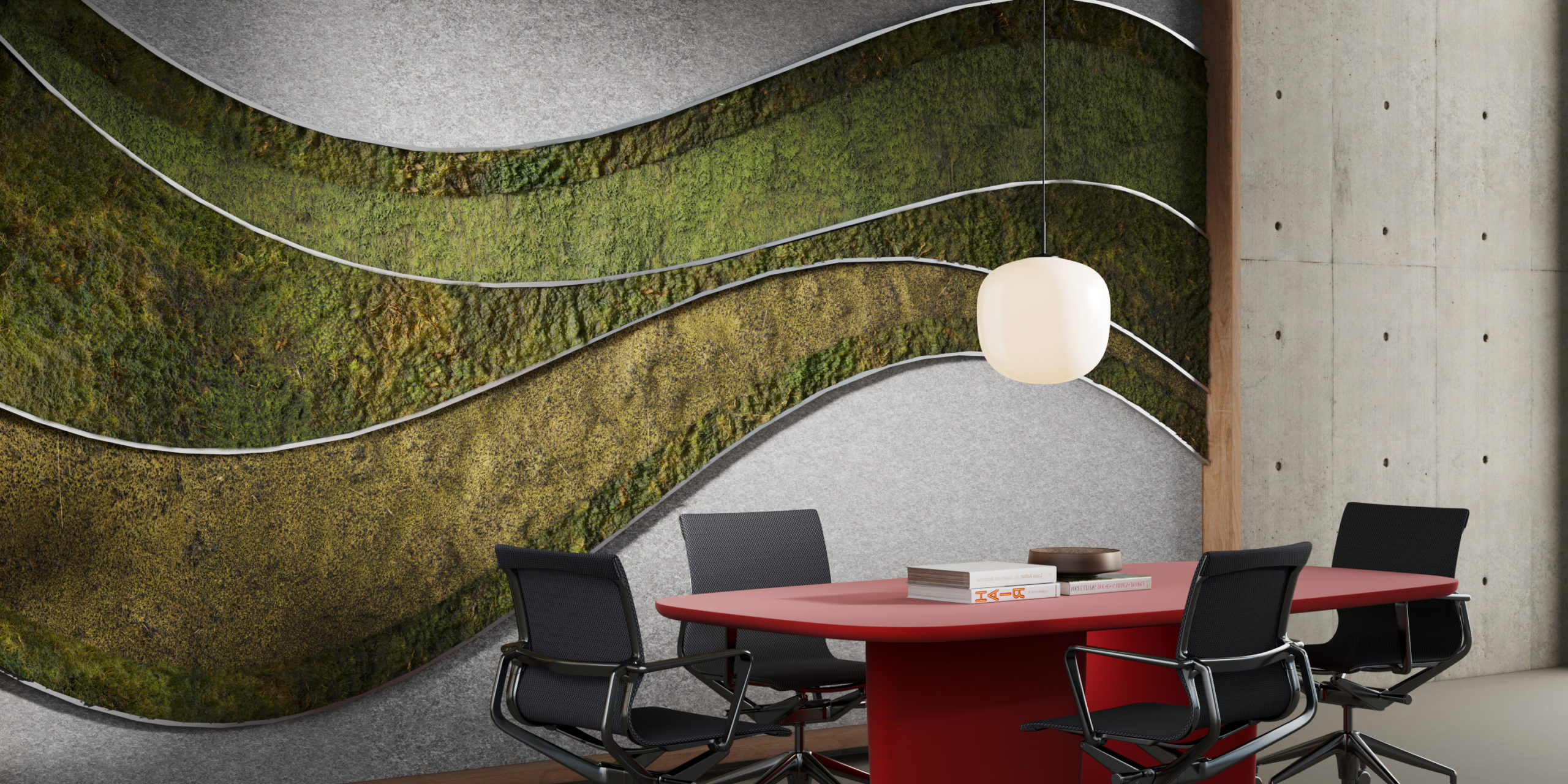
It depends entirely on your project needs. If your design calls for an ultra-natural aesthetic in a controlled environment, preserved moss delivers authenticity with elegance. But if your installation needs to be rugged, customizable, and scalable—especially in complex ceiling or wall systems—replica moss offers superior performance, creative freedom, and acoustic benefits.
Plantscape Commercial Silk source ultra-realistic replica moss and greenery, featuring ThermaLeaf® fire-rated technology for safe, stunning installations. From lush vertical gardens to branded moss, our systems deliver lasting beauty without compromising on design flexibility or building codes.
Need help picking the right moss for your next project? Our design studio is here to turn your ideas into acoustic and visual masterpieces. Contact us today.

Learn about how office interior designs are adapting in response to the return of in-person working.
You're heading to CSI Creative - our award-winning sister company specializing in architectural ceilings and walls.
